Orana Every Woman Festival
What if we stopped duplicating community effort — and did International Women's Day together?
A conversation, a free day at the Cultural Centre, and the first Moment Lounge.
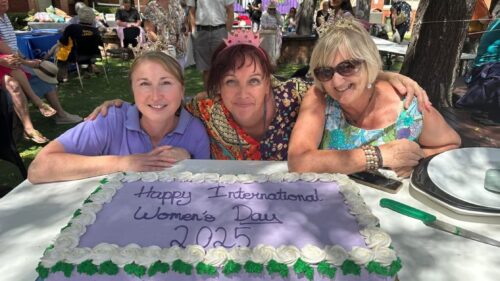
The festival began as the Dubbo Women's Festival — and it began with a conversation, not a plan. Lorna Brennan was organising a mental health month event and asked me to do something for it. I told her about Susanne North — a Sydney Writer client of mine in Sydney who gave menopause talks and women's day events, and who I'd been wanting to bring to Dubbo. Lorna and I got talking, and somewhere in that conversation we decided to do the Dubbo Women's Festival.
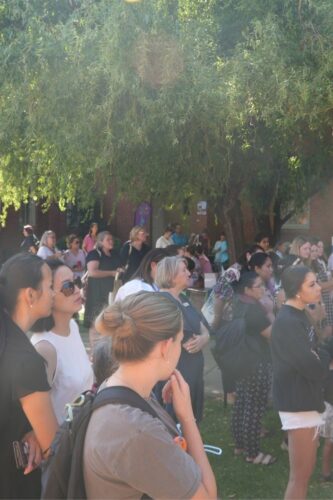
The founding instinct was there from the start: why were there so many separate International Women's Day events in Dubbo, all drawing on the same speakers, venues and sponsors, when we could create the one space for everyone to come? So we built it — a free day of care, information and connection at the Western Plains Cultural Centre, with panels on the health topics nobody was talking about, lunch under the trees, and the first Moment Lounge, created by Erifili Davis and backed by our first believers and sponsors, Charnie Tuckey and Rose Prout. Built by Lorna, Joanne "Nurse Jo" Phillips and me (Sharon Quill).
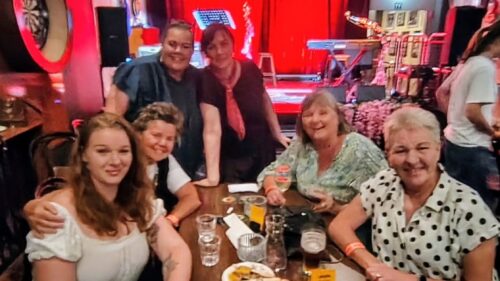
By 2026 it had become the Orana Every Woman Festival — 520 women, nearly 1,000 attendances, Free and affordable events across seven days, women travelling from 50km and further, a sold-out finale at The Crossroads Bar.
"I drove three hours. I'd do it again. There's nothing like this anywhere else in regional NSW — and it matters that it exists here, in Dubbo."
Every International Women's Day, good organisations, services, businesses and community groups run separate breakfasts, panels, lunches and events.
Each one trying to reach and help their own clientele, often asking the same women to attend, the same people to speak, the same sponsors to give, all promoting into the same crowded week.
Every one of those events is worthwhile. But regional communities do not have endless pools of money, venues, speakers, sponsors, volunteers, media attention or audience time.
So the solution was the Better Together philosophy, and it came from a community-minded place: join us instead. Keep doing what you do best, and spend your money on the other things your clients need - the things only you can do for them. The festival carries the event side, and together we maximise the impact - for every woman.


The original Better Together experiment
The idea was not to swallow everybody else's event or make every organisation look the same.
It was to create a shared umbrella: one broader story, coordinated promotion, many different entry points, and enough common ground for organisations and people to contribute what they already do well.
Instead of multiple groups separately finding speakers, venues, audiences and sponsors, could we create shared visibility? Instead of health, arts, business and community programming sitting in separate lanes, could we put them beside each other so people discover things they did not know they needed? Instead of asking every partner to become an event producer, could we let each partner contribute from where they are strongest?
That became the Festival's central Better Together experiment: can shared infrastructure reduce duplicated effort, improve access, widen audiences and create more community benefit from the same collective energy?
2024 — three women and the first container
The first Dubbo Women's Festival began with a conversation, not a plan.
Lorna Brennan was organising a mental health month event and asked me to do something for it. I told her about Susanne North — a Sydney Writer client of mine in Sydney who gave menopause talks and women's day events, and who I had been wanting to bring to Dubbo. Lorna and I got talking. Somewhere in that conversation, we decided to do the Dubbo Women's Festival.
The founding instinct was the Better Together one, and it was there from the start: why were there so many separate International Women's Day events in Dubbo, when we could create the one space for everyone to come?
So the first Festival was built by Lorna, Joanne "Nurse Jo" Phillips and me. We came at it from different directions. I brought the Better Together idea, communications, promotion and the instinct to make one shared event easier for different parts of the community to enter. Lorna brought years of trusted work with children, families and women. Joanne brought two decades of women's health experience and a deep local health network.
Joanne organised the first health panelists. These were not generic speakers flown in to tell regional women about regional life. They were women already doing the work here — including Ange Conn, Melissa Matheson, Lucinda Ferguson and Marsha McBroom.
Dr Pethidia Mango came through a different relationship. She was my own doctor, a GP with expertise in sexual and women's health, and I asked her personally to join the first Festival's perimenopause and menopause conversation.
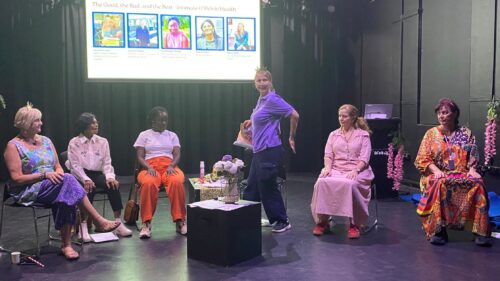
The panels ran under a banner I still love: the seasons of a woman's life. The people on them were professionals, but the tone was fun and funny — and I compered, which meant I got to ask the serious and embarrassing questions out loud. Menopause. Periods. All of it. If I was brave enough to ask it from the stage, nobody in the audience had to be.
The first day was intentionally broad. Women could hear useful health conversations and meet local professionals, but they could also eat lunch, listen to music, talk, wander, sit down, sing with Camilla Ward under the trees, or disappear upstairs into a quiet room for a while.
The Festival did not invent a community. It made more of the community visible to itself.
The first believers
Rose Prout of Centric Movement and Charnie Tuckey were the first two businesswomen to back the Festival financially.
They did it before there were attendance figures, testimonials or three years of history to point to. That is why I think of them as the First Believers.
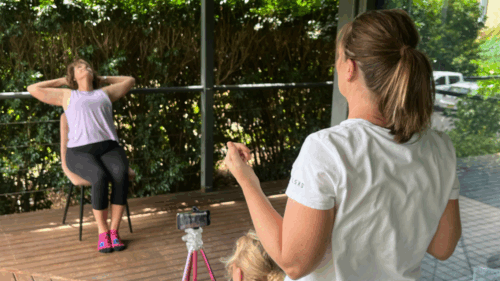
They did more than sponsor it. Together they helped create The Moment Lounge, part of our first two single-day festivals: a quiet upstairs space where women could step away from the event, breathe, stretch, watch guided wellbeing films or simply sit. Rose brought Centric Movement. Charnie brought her wellbeing and counselling perspective. Erifili Davies and Studio 138 helped turn the idea into film. Local women became part of the filmed movement content.
In miniature, The Moment Lounge contained the whole Festival method: business, wellbeing, creativity, local participation and free community access, all crossing over until the categories stopped mattering.
The relationships are the infrastructure
Some of the strongest relationships around the Festival existed long before the Festival did.
Lorna Brennan and Jo Efoti had already spent years working alongside families. In 2026, that long community relationship flowed naturally into an Every Woman Circle. The Festival did not manufacture a partnership between them. It recognised and amplified one that already mattered.
That became a deliberate principle as the Festival grew: amplify what already exists.
Across the region, quiet acts of care happen every day — playgroups, health services, support networks, grief conversations, artists' groups, grassroots organisations, business communities and informal networks built slowly through trust. The Festival creates shared space, audience and communication around them so more people can find the work, and the people doing the work can find one another.
2026 — from a day to community infrastructure
From 2–8 March 2026, the project expanded from a single International Women's Day event into a seven-day, multi-venue regional Festival on Wiradjuri Country.
I will be honest about one of the drivers, because it matters: a one-day festival was not covering its costs. Growing into a week — five days of free events alongside paid ones — gave the economics room to work, and gave the region something bigger to gather around.
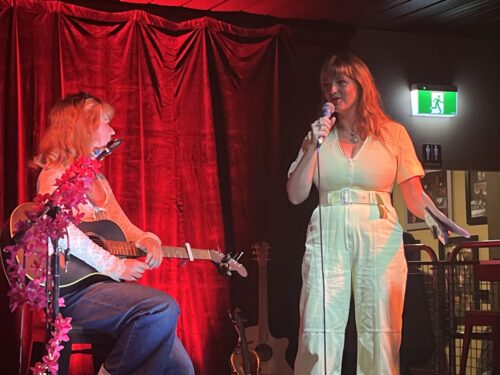
Five days of free programming — Free @ The Greens — sat alongside creative, cultural, wellbeing, leadership and community experiences. The week included Inspired by Her; Grounded: How to Lead, Live & Belong; Full Moon & The Divine Feminine with Yasmin Boland joining live from London; Orana Every Woman in Cinema with Dubbo Filmmakers; Women Who Hustle; Every Woman Circles; a culturally responsive women's cancer-awareness session; an International Women's Day sunrise gathering; and an all-female, all-local finale at Crossroads.
The important shift was not simply scale. The Festival began operating as shared community infrastructure.
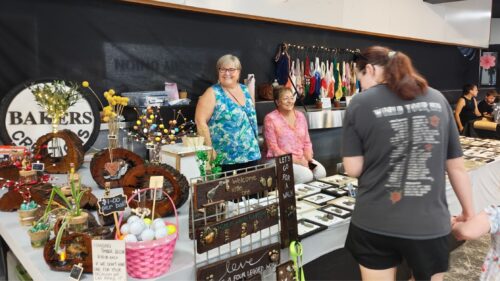
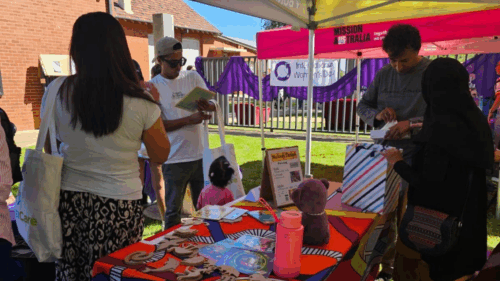
More than fifteen organisations collaborated across health, arts, community, business and government. Free @ The Greens deliberately removed the ticket barrier. Women could come for Tai Chi or coffee, a service, a conversation, art and craft, a toy library, a circle — or nothing in particular. They could arrive without an agenda and take what they needed.
Across the week the Festival reached 520 women through 40 events. The proof line matters to funders, but it is the infrastructure underneath it that matters to me.
The relationships kept widening
By the time the Festival expanded, many of the people around it were carrying histories with Social Gain that reached well beyond one event.
Camilla Ward is one of my closest friends and longest creative collaborators in Dubbo. We spent 18 months together as Cam & Shaz on DCFM 88.9, made Dubbo's Most Wuthering Heights Day Ever, developed Town Telly and kept finding ways to turn creativity into participation. Her Festival work sits inside that longer story, not beside it.
Erifili Davies first appears in the Festival story through The Moment Lounge film work with Rose Prout and Charnie Tuckey, then keeps resurfacing through filmmaking, belonging and Inspired by Her. Phoebe Maroulis has been a champion of almost everything Social Gain has tried: in 2026 she moved between financial counselling and warm referrals on one side of the Festival and her own visual art in Inspired by Her on the other.
Yasmin Boland is another kind of connection: a friendship that reaches back through Sydney, motherhood and Sydney Mum. When I asked her to join the Festival live from London, she had no hesitation — and did it without a fee. Eleanor Limprecht carries a similarly long thread: a friend since our kids were little, interviewed by me many times over the years — it was her photograph interview that seeded Dubbo Slide Night — and very much part of this year's Festival through Taco'Bout and Inspired by Her. She is also, frankly, a rock star of the literary world: five novels, most recently Cul-de-Sac (Ultimo Press, 2026), an ALS Gold Medal shortlisting, a 2025/26 Visiting Fellowship at the State Library of NSW, and a place in this year's Blue Mountains Writers Festival lineup. As The Orana Woman grows, Eleanor will be part of its stories and its sisterhood.
These relationships are not decorative backstory. They are part of the infrastructure. The Festival is able to move quickly because trust has been built slowly.
The small conversations mattered
One of the strongest lessons from 2026 was that attendance numbers do not tell you which conversations mattered.
The Every Woman Circles created smaller spaces for Life, Loss & Grief; Our Inner Chaos; The Money Story; and My Child Has Extra Needs. The grief conversation helped create momentum for the Dead End Coffee Club in Dubbo. Financial-wellbeing conversations generated warm referrals and practical follow-up. Service partners reported engagement around screening, mental-health support and community services.
Phoebe Maroulis' experience as a financial counsellor captured the point beautifully: the warm, creative Festival environment enabled conversations and referrals that were unlikely to have happened through a traditional information booth.
The same thing happened in less formal places. At Women Who Hustle, a person might talk to a service or community organisation they would never have deliberately walked into. The space between the programmed things became part of the program.
Creativity was part of the infrastructure
Creativity has never been decoration around the serious work.
Inspired by Her brought women creative practitioners together around regional stories, history, identity, resilience and belonging. Orana Every Woman in Cinema put films made by women from the region on screen. Crossroads finished the week with local female performers. Yasmin Boland appeared from London for a live Full Moon event. Eleanor Limprecht and Rachael Beck became part of the Festival's storytelling arc.
Film, music, writing, performance, movement and visual art change how a room feels. They give people another way into a conversation and another reason to stay in it.
What the Festival proves
The Festival is now Social Gain's clearest proof that Better Together can be a practical delivery model, not a nice phrase.
Start with what already exists. Make participation easier. Design for accidental discovery. Do not measure only the crowd. Use creativity as infrastructure. Keep the free heart accessible. And leave something useful behind — relationships, referrals, stories, new collaborations, creative works and shared knowledge.
That is the Social Gain way: being human, finding our commonality to cut through, not wasting but amplifying, improving the wellbeing of our community.
The annual Festival is the live gathering. The Orana Woman now carries the women, stories and creative work through the rest of the year — the one-to-many next step, so the women who can't make it to the room stay connected anyway. It is the Sydney Mum instinct carried forward: everyone has a story, and nobody should miss out because they couldn't get there on the day.
What comes next — 2027
A Women's Week 2027 Expression of Interest has been submitted: $32,000, with Dubbo Filmmakers as the auspicing organisation. If it lands, 2027 becomes the Festival's first funded year — and the first test of the Stage 1 strategy, certifying Social Gain as it already exists, with the Festival and The Orana Woman as the biggest project on the books.
The Festival is the gathering. The relationships are the legacy.
What began as a question about duplicated International Women's Day effort has become a regional platform for connection, wellbeing, creativity and participation — still built on the same idea: collaborate before duplicating.
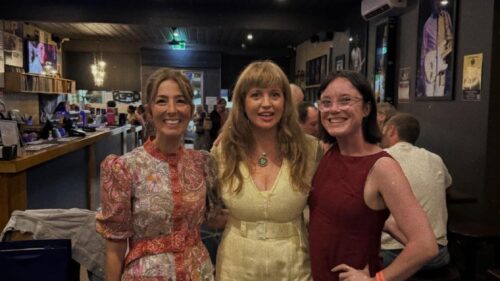
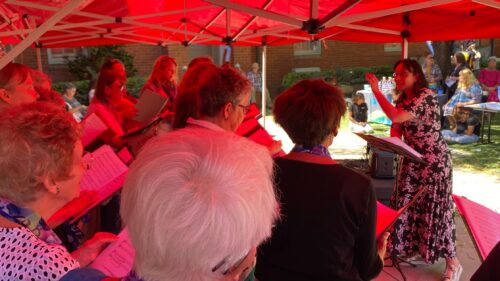
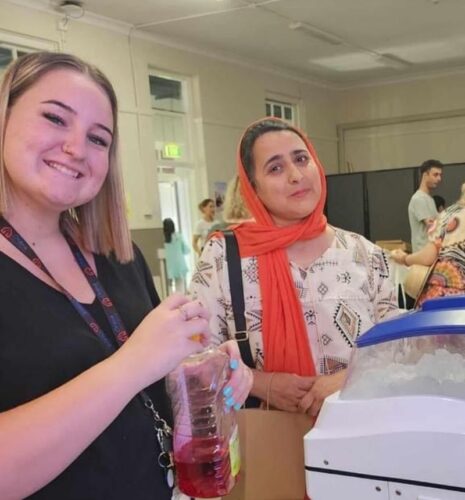
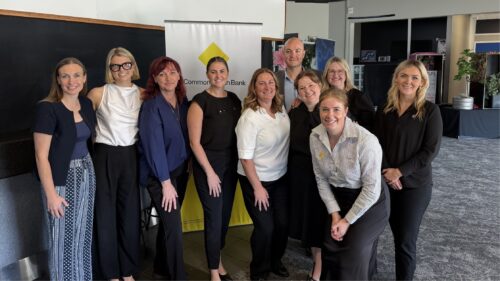
Scenes from the years.
Want something like this in your town?
We design and deliver community-led projects with councils, services and local partners.